
Timing Belt Replacement in Louisville, KY
A timing belt rarely gives much notice before it fails, which is exactly why it's replaced on a schedule. LouCity Automotive Services handles timing belt replacement in Louisville, KY for drivers who are approaching their interval or have already passed it. Doing the job on time costs far less than repairing an engine after a belt snaps. Our shop is located at 4412 Atlas Powder Rd.
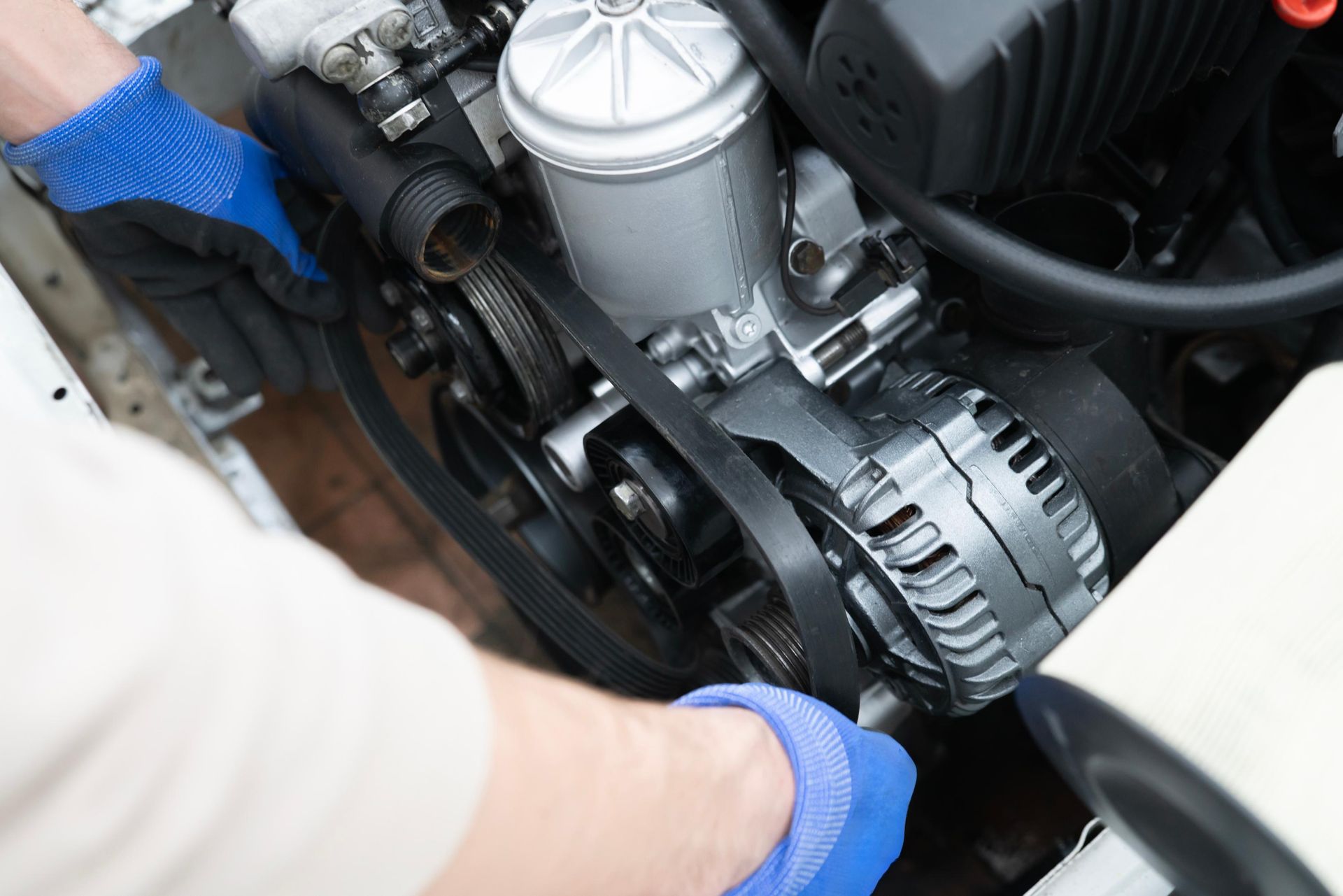
When Should a Timing Belt Be Replaced?
Most timing belts should be replaced somewhere between 60,000 and 105,000 miles, depending on the vehicle. Your owner's manual or maintenance schedule lists the exact number. Age counts as well. Rubber breaks down over time, so many manufacturers also set a limit of around 7 to 10 years, whichever comes first.
If you bought your vehicle used and don't know whether the belt was ever changed, assume it wasn't. A receipt or a sticker under the hood is the only real proof. Without one, replacing it near the interval is the safe call.
Why Waiting Can Get Expensive
The timing belt keeps the crankshaft and camshafts turning in perfect step. That timing lets the valves open and close at the right moment as the pistons move up and down.
Many engines are what mechanics call interference engines. In these, the valves and pistons share the same space at different moments. If the belt breaks, the valves stop moving while the pistons keep going, and they collide. The result can be bent valves, damaged pistons, or a ruined cylinder head. On a non-interference engine, a broken belt just stops the car, but you're still waiting on a tow.
What Timing Belt Service Includes
Timing belt service is labor-heavy. On many engines, the belt sits behind covers, pulleys, and accessory belts that all have to come off first. That's why the parts around it are usually replaced during the same visit
Inspecting Related Parts
With the covers off, the tensioner, idler pulleys, and cam and crank seals are all exposed. A leaking seal can soak the new belt in oil and shorten its life, so seals are checked closely. A tensioner or pulley with a worn bearing can fail and take a new belt with it.
Timing Belt and Water Pump
On many engines, the water pump is driven by the timing belt and sits right behind it. Replacing the timing belt and water pump together is common practice, since the labor overlaps almost entirely. Leaving an old pump in place risks a leak that means taking everything apart again.
Setting the Timing
The new belt goes on with the crankshaft and camshafts lined up on their timing marks. Tension is set to the manufacturer's specification. Then the engine gets turned over by hand to confirm the marks still line up before it's started.
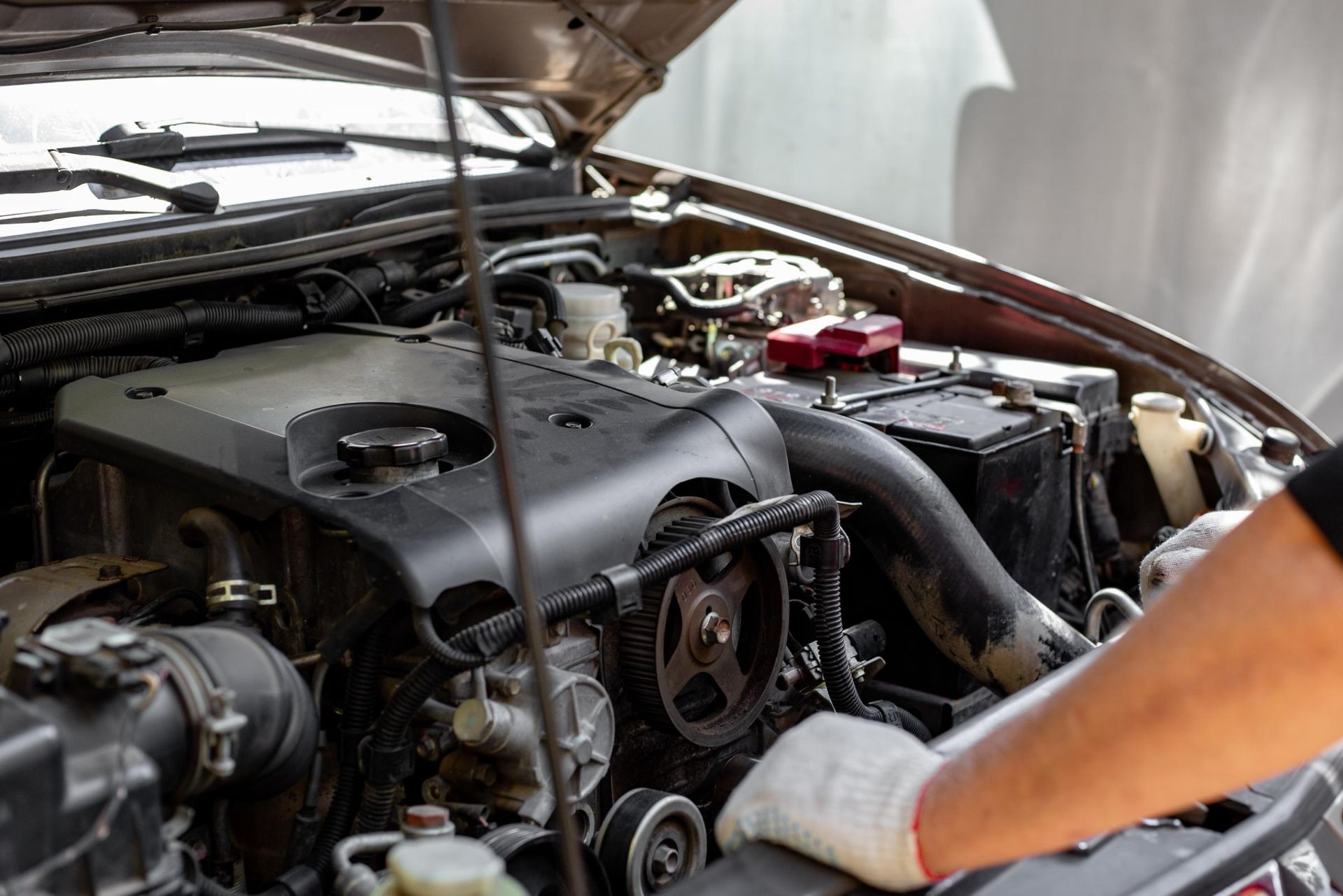
Belt or Chain: Knowing What Your Engine Has
Not every engine uses a belt. Many use a timing chain, which runs inside the engine in oil and often lasts the life of the vehicle. Chains can still stretch, though, especially when oil changes are skipped. A rattle at startup or a check engine light for cam and crank correlation can signal a stretched chain.
Your owner's manual will tell you which one your engine has. If it lists a replacement interval, it's a belt.
Planning Ahead With LouCity Automotive Services
Because this job is scheduled rather than urgent, you get to plan it. Call ahead with your year, make, model, and mileage, and you'll know what parts the job involves on your engine. At LouCity Automotive Services, timing work sits alongside the rest of our engine service.
If a belt has already failed and caused damage, that becomes
engine repair and replacement, which we also handle. For engines with timing chains, regular
oil changes are the best protection against chain stretch.
Scheduling Timing Belt Replacement in Louisville, KY
The shop is on Atlas Powder Rd in Louisville, KY 40258. Since the vehicle may need to stay for a good part of the day, plan a ride or arrange your schedule before you drop it off. If the belt has already broken, don't try to start the engine again; call us first.
Timing Belt FAQ
Are there warning signs before a timing belt breaks?
Often there are none. Occasionally you'll hear a ticking from the front of the engine or notice an oil leak near the timing cover. A visual check can show cracks, missing teeth, or a glazed surface, but the belt is usually hidden behind covers.
How long does timing belt replacement take?
Most timing belt jobs take 3 to 6 hours of labor. Engines mounted sideways in front-wheel-drive cars, and V6 engines in particular, sit at the longer end because of how tightly the engine bay is packed.
Is it worth replacing the timing belt on a high-mileage car?
Usually, yes, if the rest of the engine is healthy. The belt job costs a fraction of an engine replacement. If the car has other major problems, such as a slipping transmission, it's worth weighing the whole picture first.
What happens if I go past the replacement interval?
Nothing happens right away, but the risk climbs with every mile. The interval is set with a safety margin, not as a countdown. Being 5,000 miles over isn't an emergency, but it's a reason to schedule the job soon.
Should the serpentine belt be replaced at the same time?
It's a smart time to do it. The serpentine belt often has to come off to reach the timing cover anyway. If it shows cracks or is past 60,000 miles, replacing it then saves a separate visit.
Look Up Your Interval
Check your owner's manual or service records for the timing belt interval, then compare it to your odometer. If you're close, call (502) 819-1620 or email timdurham2009@hotmail.com to plan the work.