Brake Repair in Louisville, KY
LouCity Automotive Services handles brake repair in Louisville, KY for cars and trucks that aren't stopping the way they should. Most brake trouble announces itself early with a noise, a vibration, or a pedal that feels different under your foot. Catching it at that stage usually means a simpler job. We inspect the system, replace worn pads and rotors, and fix the hydraulic parts that make your vehicle stop straight and smooth.
When Do Brakes Need to Be Replaced?
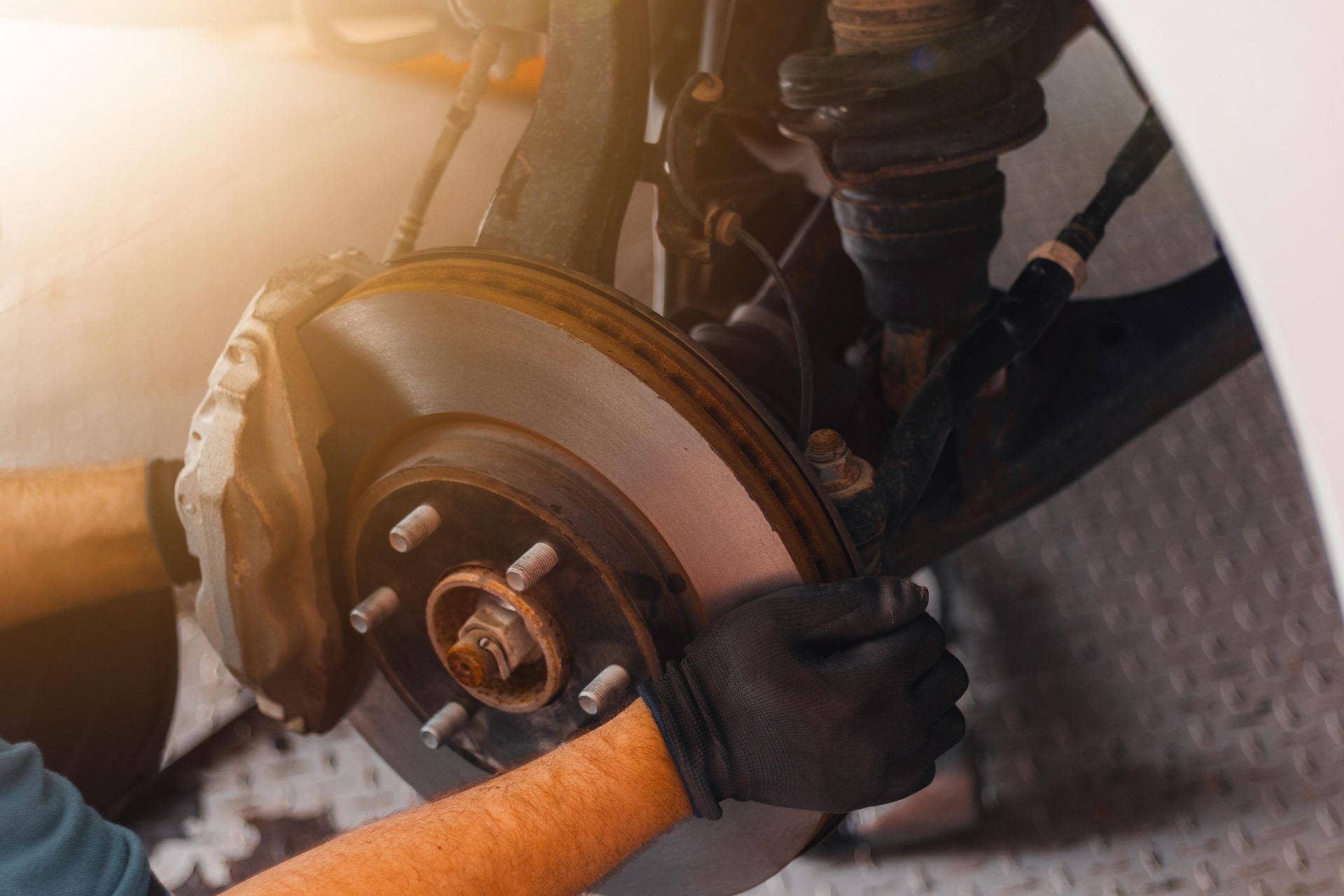
Brake pads need replacing once the friction material wears down to about 3 millimeters, roughly an eighth of an inch. New pads start out somewhere around 10 to 12 millimeters thick, so there's a long stretch of normal wear before that point. How quickly you get there depends on your driving. Stop-and-go traffic, heavy loads, and hilly routes all use up pads faster than steady highway miles.
Rotors outlast pads, but they wear too. They're replaced when they drop below their minimum safe thickness or when the surface is cracked or deeply grooved.
Your vehicle gives you clues along the way. Many pads have a small metal tab that scrapes the rotor and makes a high-pitched squeal when the pad is getting low. If that squeal turns into a harsh grinding, the pad is gone and metal is cutting into the rotor on every stop.
What Brake Repair Includes
A brake job isn't always the same job. Some cars need only new pads. Others need rotors, a caliper, or a fluid flush as well. Here's what each part of the work covers.
Brake Inspection
An inspection looks at pad thickness on all four wheels, the condition of each rotor, and the level and color of the brake fluid. It also checks the lines and hoses for leaks or rust. You'll know what's worn, what's fine, and what can wait.
Brake Pads and Rotors
Pads are always replaced in pairs on the same axle, both fronts or both rears, so the car brakes evenly. Rotors on that axle are either resurfaced or replaced at the same time. Fresh pads against a worn rotor surface won't seat properly and can bring the noise right back.
Calipers and Hydraulic Parts
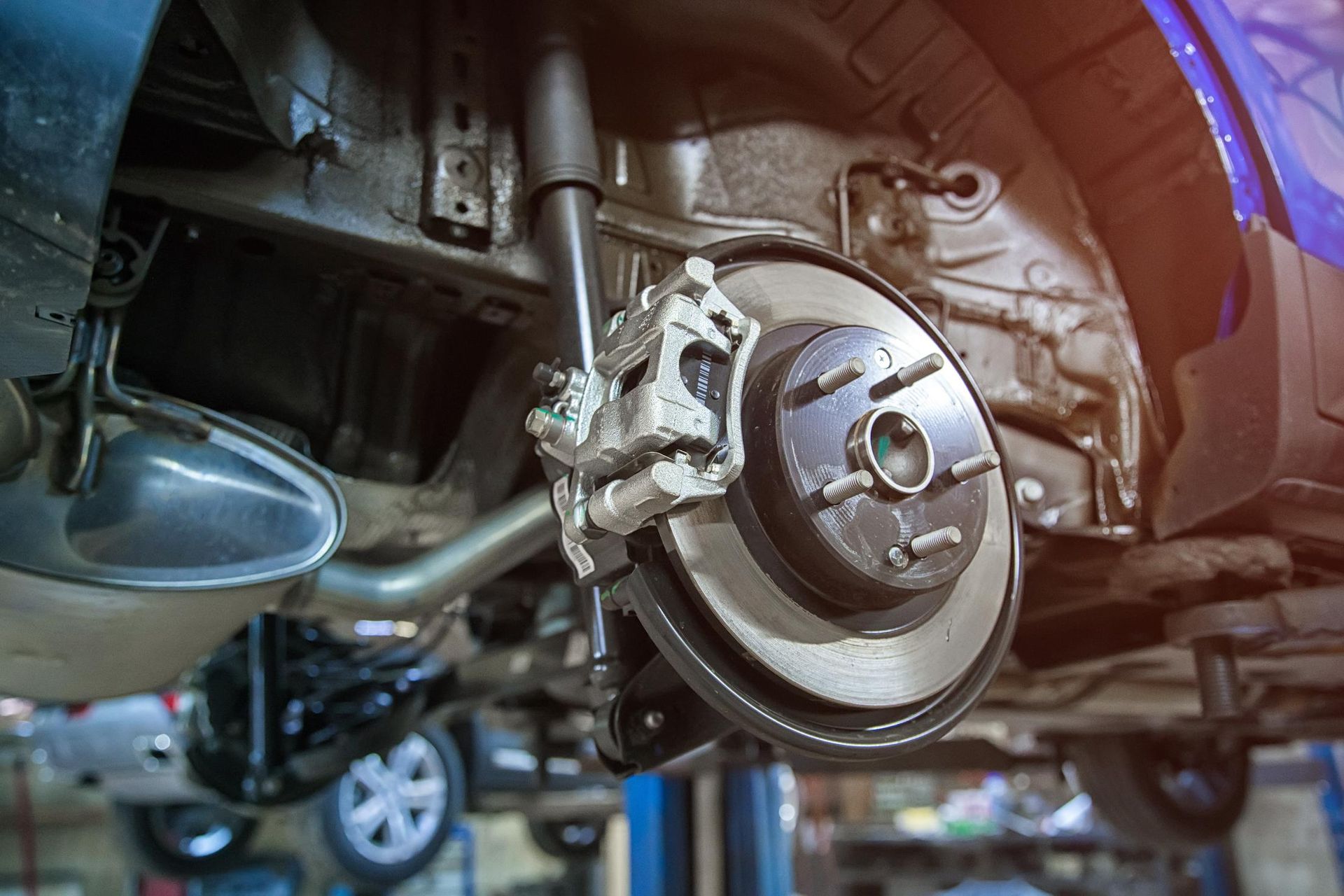
The caliper squeezes the pads against the rotor. When one sticks, the car may pull to the side, the pad on that wheel wears out early, and you might smell something hot after a drive. Brake fluid and lines matter just as much. Fluid absorbs moisture over time, and rusty lines can leak, which leaves the pedal soft or low.
Why Bring Your Brakes to LouCity Automotive Services
Brake problems don't always stay brake problems. An inspection might turn up a fluid leak, a worn suspension part, or a tire wearing unevenly. At LouCity Automotive Services, the brake work and the rest of the repair happen in the same shop, so you're not driving across town for a second opinion.
It also makes sense to pair brake checks with routine visits. If your car is already in for
an oil change, that's a good time to ask how much pad life is left. And if you drive a diesel, its brakes carry more weight on every stop; our
diesel truck repair
work covers those trucks too.
Finding Our Shop for Brake Repair in Louisville, KY
The shop is at 4412 Atlas Powder Rd, Louisville, KY 40258. Between interstate merges and stoplight after stoplight in town, Louisville driving puts steady work on your brakes. If something sounds or feels wrong, bring the vehicle by or call ahead and describe what you're noticing.
Brake Repair FAQ
Do I need to replace brake pads on both sides?
Yes. Pads are replaced as a set on each axle, meaning both front wheels or both rear wheels together. Replacing only one side leaves one wheel gripping harder than the other, and the car will pull when you brake.
Can rotors be resurfaced instead of replaced?
Sometimes. Every rotor has a minimum thickness stamped on it, and resurfacing removes metal. If machining would take the rotor below that number, or if it's cracked or deeply scored, it has to be replaced.
Why does my steering wheel shake when I brake?
A shake through the wheel or a pulsing pedal usually means the rotor surface is uneven. Pad material can build up in spots, or the rotor can wear to slightly different thicknesses. It's most noticeable when slowing from highway speed.
How often should brake fluid be changed?
Many manufacturers recommend changing brake fluid every two to three years. The fluid pulls in moisture from the air, which lowers its boiling point and can corrode parts inside the system. Your owner's manual lists the exact interval for your vehicle.
Why does my car pull to one side when braking?
The usual causes are a sticking caliper, a collapsed brake hose, or a pad contaminated with oil or fluid on one side. Each one makes a single wheel brake harder or softer than its partner.
Is it safe to drive with the brake warning light on?
A red brake light can mean the parking brake is engaged or the fluid is low, and low fluid needs attention right away. An amber ABS light means the anti-lock system is off. Your regular brakes still work, but the wheels can lock up in a hard stop.
Book a Brake Check
A squeal today is a set of pads. A grind next month can mean pads, rotors, and possibly a caliper. Call (502) 819-1620 or email timdurham2009@hotmail.com and tell us what your brakes are doing.